

Garment Steamers Explained: How They Work and How to Use One
Garment Steamers Explained: How They Work and How to Use One
A garment steamer uses hot steam to relax fabric fibres and remove creases without an ironing board. This guide explains how clothes steamers work, how to use one safely, which fabrics they suit and when steaming is a better choice than ironing for quick clothing refreshes and travel.
Introduction
We’ve all been there; you’re about to get dressed only to spot that the outfit you’ve picked is looking like it’s been at the bottom of the wardrobe for months. So, what do you do? Drag out the ironing board, find something else to wear, or simply accept the creases and hope nobody notices? Thankfully, there is another option. A garment steamer can help smooth out wrinkles and creases in clothes with ease. But how do they work? Beldray is here to help explain exactly how clothes steamers work and why owning one could help solve your wardrobe worries.
What is a garment steamer?
A garment steamer is a handheld alternative to an iron and is ideal when you’ve not got the time, space or energy to use a traditional iron. You can get handheld steamers, great for quick refreshes or taking on your travels, or upright units, perfect for larger loads. Whichever size you use, clothes steamers generally all work in the same way, using hot steam to relax the fabric fibres and release creases, rather than pressing them out with a hot soleplate. Because of how garment steamers work, you can remove creases without needing an ironing board, such as with a door, wardrobe or heat-proof furniture.
How does a clothes steamer work?
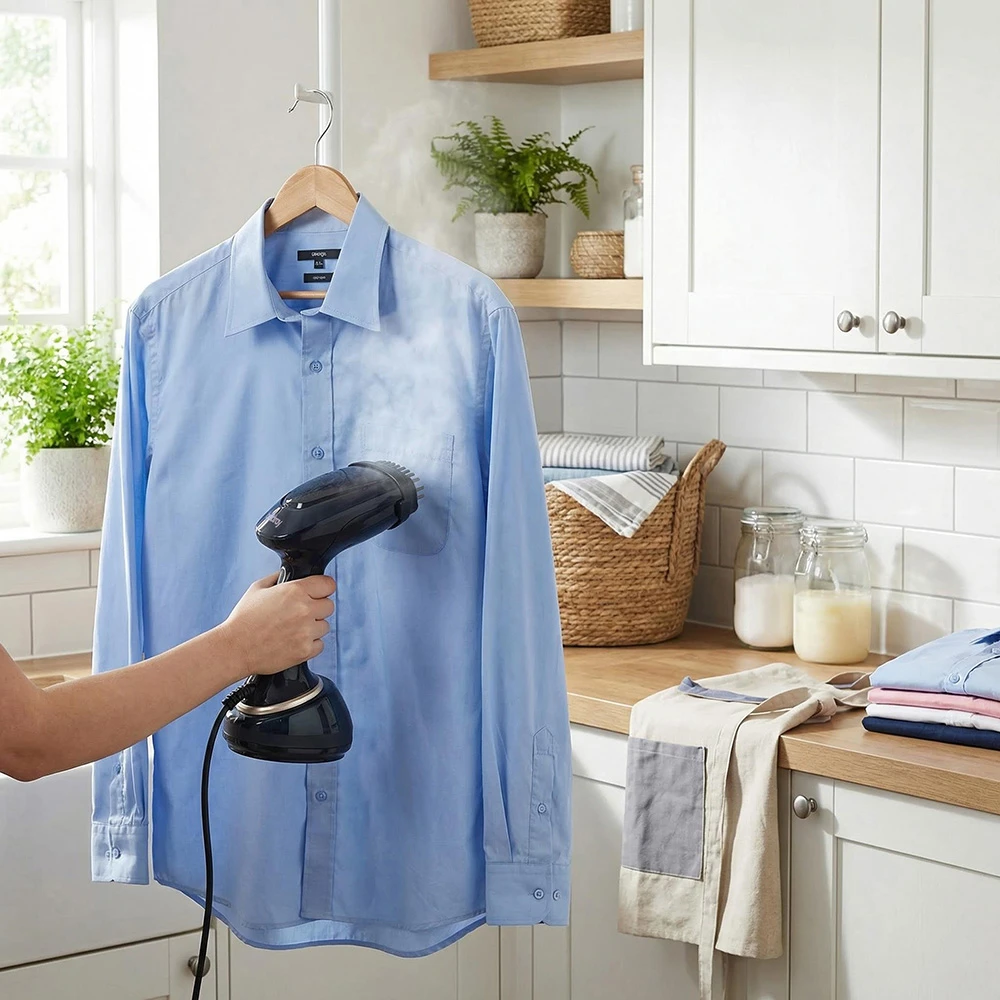
Garment steamers work by using hot steam to relax the fabric fibres, which encourages unwanted creases to drop out. The steam output is what gets to work on the fabric, gently loosening the fibres without the need to press your clothes against a hard surface. Simply hang up your garment and let the steamer do the hard work for you.
Depending on the garment steamer model, you might also have a fabric attachment to help out, by lifting the fabric up or evenly distributing steam across the garment, making it even easier to get the results you’re looking for.
How to set up a garment steamer
Fill the water tank.
Switch the steamer on.
Allow the steamer to heat up.
And you're ready to go!
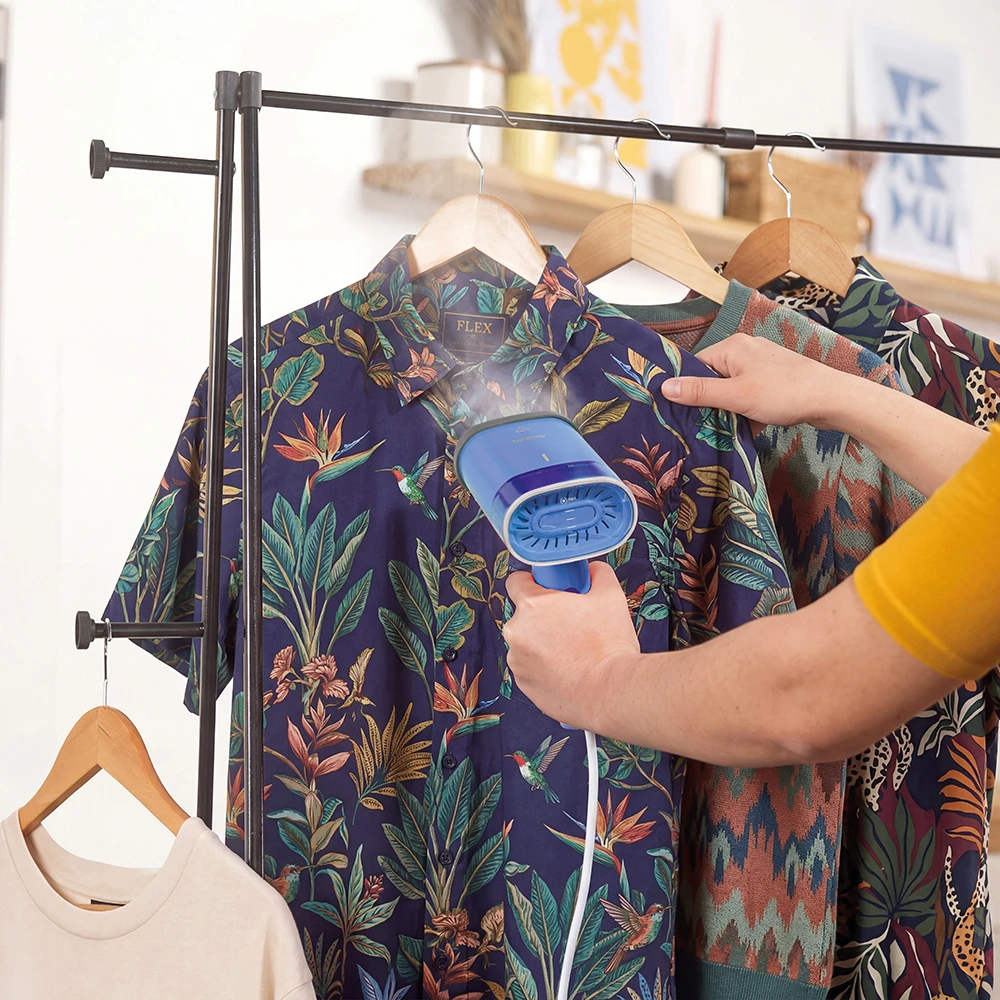
Once you’re ready, hang your garment at an easy-to-reach height and work your way from top to bottom, gently moving the steamer over the fabric and letting the steam relax those pesky creases. For any stubborn spots, simply go over them again rather than holding the steamer in one place for too long. And just remember, no matter how much of a rush you’re in, never steam garments while you’re wearing them as hot steam and skin are not friends.
Should I steam or iron?
There is no right answer to the question ‘ironing or steaming?’ as it all depends on the fabrics, your habits, and your goals. A traditional iron has its benefits in the same way a garment steamer has unique benefits.
Iron
Pros
- ✔Great for a crisp, pressed finish
- ✔Better suited for large loads
- ✔Works well on heavier fabrics
Cons
- ✖Requires an ironing board or flat surface
Garment steamer
Pros
- ✔Great for portability
- ✔Handy for quick touch-ups
- ✔Clothes can stay on hanger
Cons
- ✖Not great for getting a crisp finish
Ultimately, an iron and garment steamer serve different purposes, so if you’re after a powerful tool that can help steam through large loads of washing, an iron is the better fit. However, if you’re looking for a lightweight, portable option that’s ideal for travel and quick touch-ups, a garment steamer is the way to go.