

How to Deep Clean Laminate and Wood Floors Without Water Damage
How to Deep Clean Laminate and Wood Floors Without Water Damage
To deep clean laminate and wood floors safely without water damage, clear all loose debris first using a soft vacuum attachment to avoid scratching. Next, clean using minimal moisture by choosing a hard floor cleaner that actively controls water output and immediately extracts liquid from the surface. Avoid soaked traditional mops or excessive steam, which can penetrate floor joints, causing warping, lifting, or long-term structural damage.
Laminate and real wood floorings are stunning additions to any modern UK home, but maintaining their pristine shine can feel like a balancing act. While you want a spotless, hygienic finish, these materials are notoriously sensitive to moisture. Excessive water can seep into the V-grooves and joints, leading to swelling, warped boards, and costly structural damage.
Achieving a deep, thorough clean shouldn't put your beautiful flooring at risk. By understanding the specific needs of your floors and adjusting your routine, you can keep them looking brand new for years to come. Between us, we've got this.
The Golden Rule of Hard Floor Care: Minimal Moisture
Traditional cleaning methods—specifically the classic mop and bucket—are often the primary cause of moisture damage on hard floors. When a mop head is saturated, it leaves pools of standing water on the surface. For laminate and engineered wood, this liquid quickly finds its way into the seams, causing the underlying layers to expand and lift.
To prevent this, the ultimate goal is to clean with precisely controlled moisture. Your floors should dry within a couple of minutes of being cleaned. If they stay wet longer than that, too much water is being used.
Step-by-Step Guide to Safely Deep Cleaning Laminate and Wood Floors
Follow this straightforward, expert-backed routine to achieve a deep clean that protects your investment.
How to Safely Deep Cleaning Laminate and Wood Floors
Clear the Surface Debris
Before any liquid touches the floor, you must remove dry dirt, dust, and pet hair. Fine grit acts like sandpaper under pressure, meaning that mopping over a dusty floor will inevitably lead to fine surface scratches.
Use a vacuum cleaner equipped with a motorised turbo head or a dedicated hard floor setting. Ensure the brush bar is gentle enough for hard surfaces so it picks up debris without scratching the protective seal.
Choose the Right Cleaning Solution
Avoid harsh chemical agents, bleach, or highly abrasive cleaners. These can strip the finish off real wood or dull the top wear layer of laminate flooring.
Opt for a mild, pH-neutral floor cleaning solution formulated specifically for laminate or wood. Never over-saturate the floor; a fine, even mist or a controlled application is all that is required to break down sticky spots and spills.
Controlled Mopping and Fast Drying
The secret to a streak-free, safe finish is combining the washing and drying process into a single sequence.
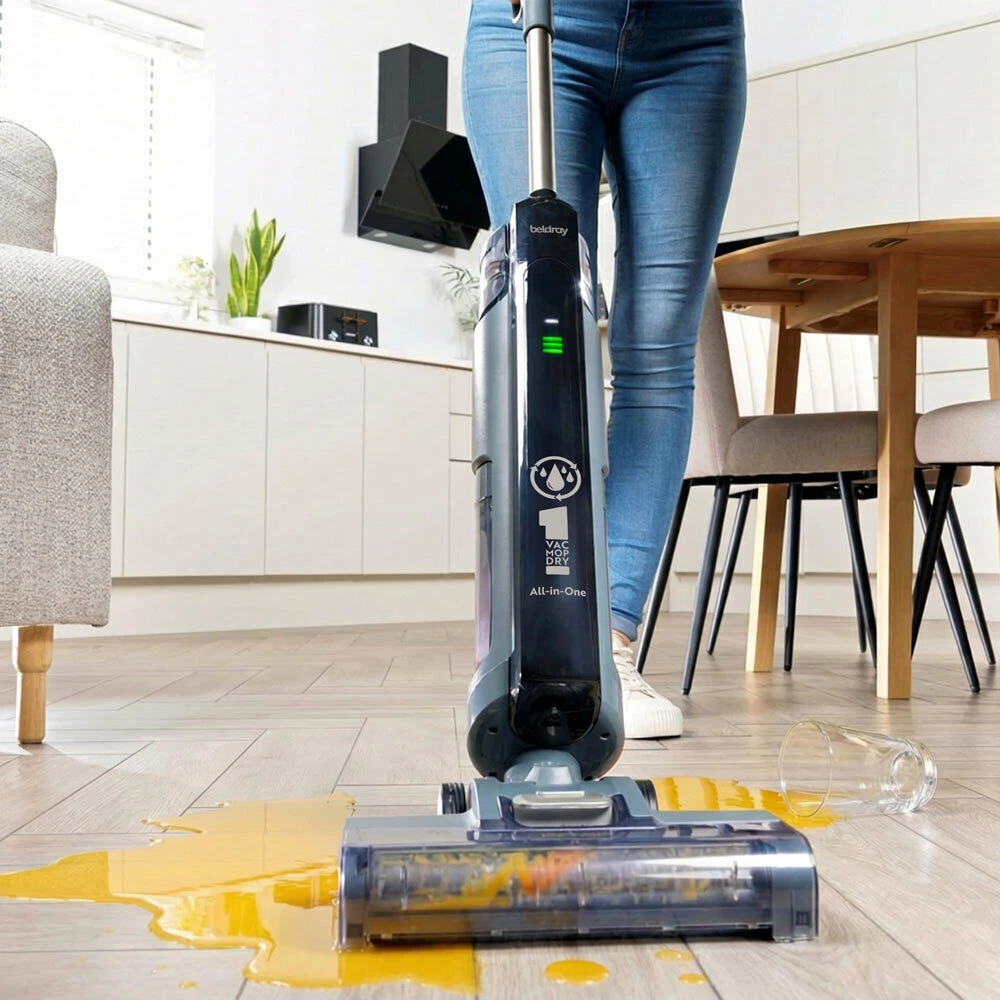
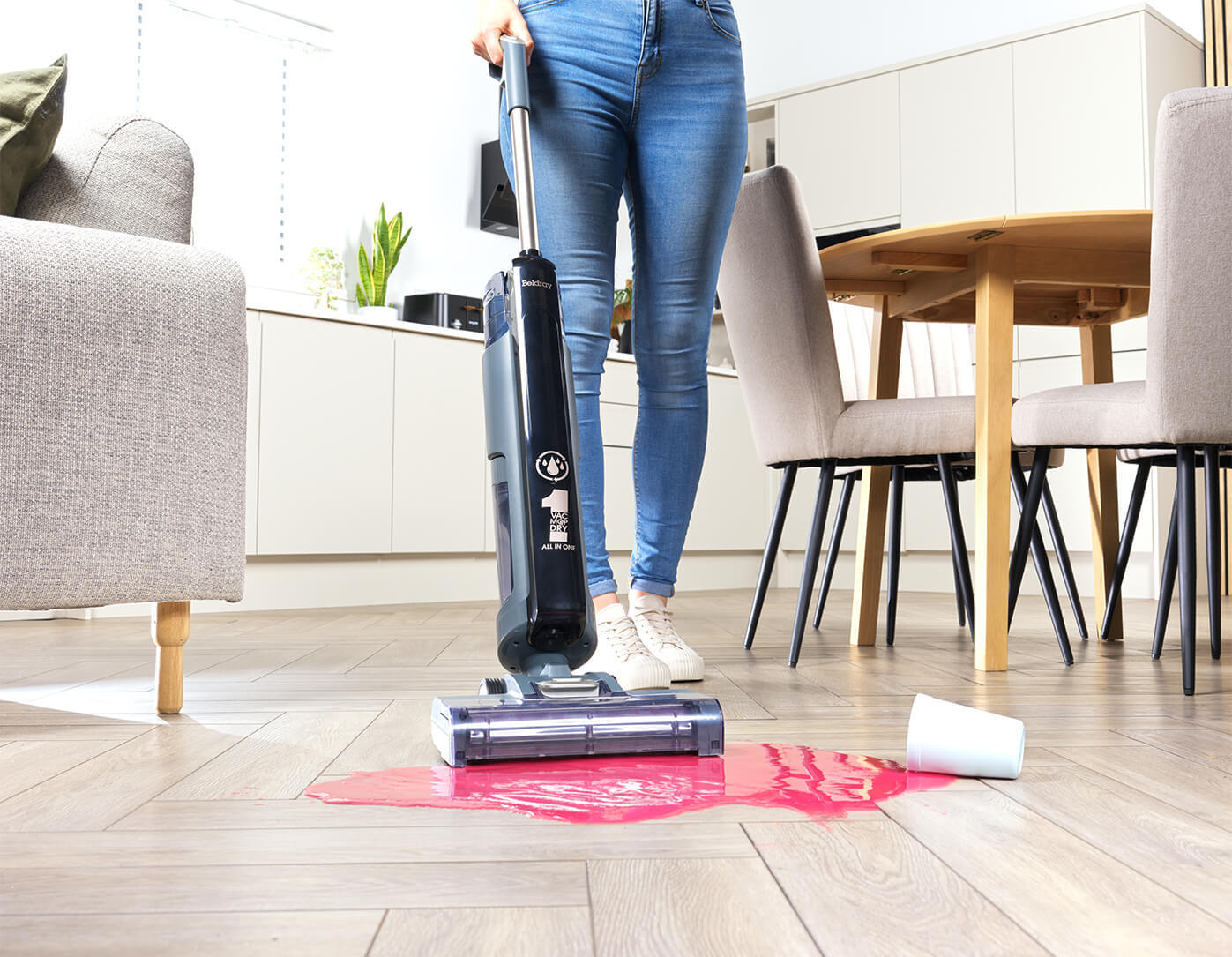
Instead of dragging a wet mop across the room, use a modern multi-functional hard floor cleaner that automatically dispenses clean water while simultaneously vacuuming up the dirty residue. This dual action ensures that water never sits on your planks for more than a few seconds, leaving the floor virtually dry immediately after passing over it.
The Pros of Switching to an All-in-One Hard Floor Cleaner
Upgrading from a traditional setup to an advanced, multi-purpose cordless wet and dry floor cleaner offers significant advantages for premium hard floors:
Pros
- ✔Ultimate Floor Protection: These devices combine the vacuum, mop, and dry functions simultaneously, ensuring liquid is pulled away from delicate floor joints instantly.
- ✔Superior Hygiene: Unlike a traditional bucket where you constantly dip your mop back into dirty water, modern multi-functional cleaners utilize a dual-tank system. This keeps clean and dirty water entirely separate, so you are always cleaning with 100% fresh water.
- ✔Time and Space Saving: You no longer need to find storage space for a dustpan, a vacuum, and a bulky mop bucket. A single cordless tool handles the entire evening reset in a fraction of the time.
- ✔Effortless Maintenance: Premium models feature a self-cleaning dock or tray, flushing out the brush roll and internal tubes automatically so you never have to clean a dirty mop head by hand.